


Updates to UK Waste Regulations and How You Can Get Ahead
As the UK waste and resource sector evolves, updated regulations are set to bring significant changes that will impact local authorities, waste management companies, and MRF operators. From Simpler Recycling to the UK Emissions Trading Scheme (ETS), these updates will demand increased accountability, transparency, and data accuracy.
At Alfred H Knight, we help organisations throughout the waste and recycling industry stay prepared and maintain compliance through independent inspection and analysis. Here’s a breakdown of the key regulatory changes in 2025 and how to get your organisation ready.
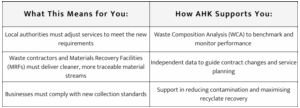
Simpler Recycling: Consistency in Waste Collection
England introduced the Simpler Recycling policy in 2025. It is one of the year’s biggest shifts.
From March 2025, businesses with more than 10 employees must comply with the new rules. Local authorities follow in March 2026. This includes:
- Plastic, metal, paper/card, and glass
- Weekly food waste collections
- Garden waste (free or paid, depending on the council)
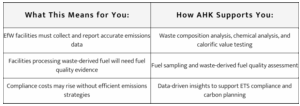
UK Emissions Trading Scheme (ETS): Preparing EfW Operators
The UK ETS will come into effect for Energy from Waste (EfW) in 2028. As a result, there will be a cap on the total amount of CO2 emissions that plants can emit. Through incentivising allowances, organisations are encouraged to innovate and invest in low-carbon technologies.
From 2026, EfW operators must monitor their emissions, even where no full financial obligation applies. Therefore, you should be proactive and be prepared.
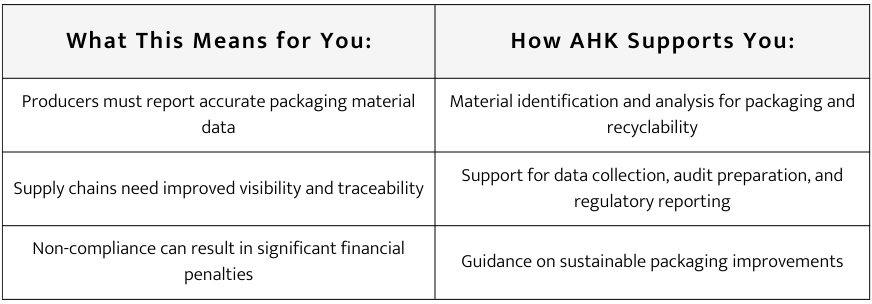
Extended Producer Responsibility (EPR)
Although full implementation has been delayed, the EPR scheme for packaging waste is moving forward, with cost recovery mechanisms expected from 2025–2026. Producers will bear financial responsibility for the end-of-life impact of their packaging.
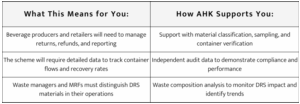
Deposit Return Scheme (DRS)
In 2027, the long-awaited Deposit Return Scheme is due to roll out in Scotland, England, Wales and Northern Ireland. The DRS aims to increase recycling rates and reduce litter by placing a deposit on drinks containers, which consumers can reclaim by returning the items.
While implementation dates and system details vary across regions, producers, retailers, and waste handlers should prepare now for new responsibilities around collection, traceability, and reporting.
MRF Code of Practice (CoP)
The updated MRF Code of Practice states that if your Materials Recovery Facility (MRF) processes more than 1,000 tonnes of waste annually, you must sample, analyse, and report incoming and outgoing recyclables as part of the updated MRF Code of Practice.
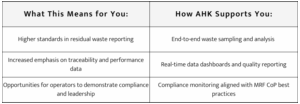
Why Quality Data Is More Important Than Ever
Whether you’re a local authority responding to Simpler Recycling or an EfW operator preparing for ETS, accurate data underpins compliance.
By investing in independent waste analysis, you gain:
- Confidence in regulatory reporting
- Data to support cost-saving decisions
- Evidence for funding, contract negotiation, or policy responses
How to Adapt to Changes to UK Waste Regulations
With sweeping changes across multiple policies, the time to act is now. Here’s how to futureproof your operations:
- Review your current waste data and reporting practices
- Engage with experts to audit compliance risks and opportunities
- Partner with trusted analysts like Alfred H Knight to deliver reliable insights
Visit Alfred H Knight at LARAC 2025 to discuss UK Waste Regulations
Alfred H Knight turns complex waste regulation into clear, actionable insight. Let us help you stay compliant, competitive, and ready for the future of waste in the UK.
Visit Alfred H Knight at LARAC Conference and Celebration Awards 2025 to speak with experts who understand the regulations and have a wealth of technical experience. Let’s discuss your operations and how our services support your compliance and sustainability goals.
Want to speak with an AHK expert today? Get in touch via our contact page.